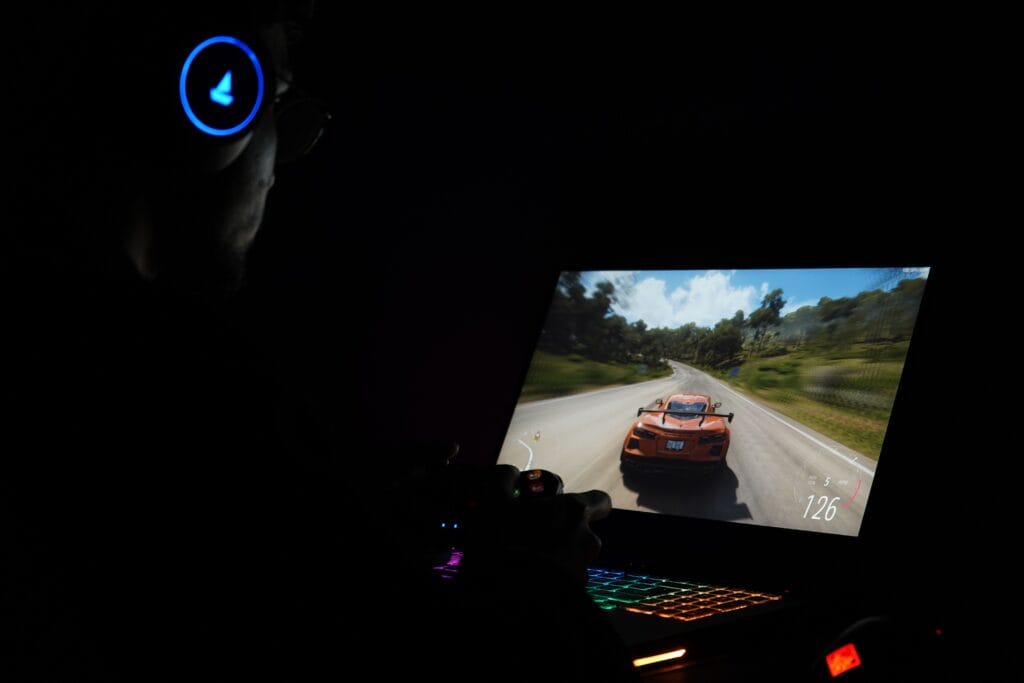
Here’s the honest short answer: budget gaming laptops are worth it in 2026 if you go in with realistic expectations and buy the right configuration — but the 2026 price climate makes “budget” mean something different than it did a year ago. A global memory shortage has pushed component prices up across the board, which means the bar for what counts as a good budget gaming laptop deal has shifted, and some “cheap” listings are worse value than they look.
This guide walks through when a budget gaming laptop genuinely makes sense, what you should realistically expect for your money right now, and the specific traps that turn a tempting price into a regretful purchase. If you’ve decided a gaming laptop is right for you and just want the picks, our best mini gaming laptops guide covers specific models — but read this first so you know what you’re actually buying.
What “budget gaming laptop” means in 2026 (it changed)
The honest reality: the memory shortage has reshaped the budget tier. A year ago, you could find capable RTX 4060 gaming laptops dipping below $1,000 during sales. In 2026, that’s become much harder — finding a good current-generation RTX 5060 laptop under $1,000 has become nearly impossible, and prices have generally drifted upward.
Today’s budget gaming laptop landscape roughly breaks down like this:
- Entry tier (~$1,000): RTX 5050 configurations. The 5050 is genuinely entry-level — enough to play current games at 1080p if you’re willing to tweak settings, but no headroom to spare.
- The budget sweet spot (~$1,100–$1,400): RTX 5060 configurations. The RTX 5060 launched around $1,099 and is widely considered the budget pick that’s actually worth buying — it’s a real generational step over the old 4060, with faster GDDR7 memory and DLSS 4 frame generation.
- Upper budget (~$1,400–$1,500): better-cooled RTX 5060 builds or entry RTX 5070 configurations with more RAM and nicer displays.
So when you ask “are budget gaming laptops worth it,” the honest framing in 2026 is really “is a roughly $1,000–$1,400 gaming laptop worth it” — because that’s where the realistic budget floor now sits.
When a budget gaming laptop IS worth it
A budget gaming laptop is a smart buy if these describe you:
- You play at 1080p and are happy there. Budget gaming laptops (RTX 5050/5060) are built for 1080p gaming, and they do it well. If you’re not chasing 1440p or 4K, you’re not paying for performance you won’t use.
- You’re willing to tweak settings. Budget hardware rewards a little flexibility — turning a few settings from Ultra to High costs almost nothing visually and keeps frame rates smooth. If you accept that, a budget laptop delivers a great experience.
- You value DLSS and frame generation. The RTX 50-series brings DLSS 4 multi-frame generation even to budget cards — AI-inserted frames that meaningfully boost frame rates in supported games. This genuinely stretches what budget hardware can do, and it’s exclusive to the current generation.
- You need portability and one machine for gaming plus everyday work. A budget gaming laptop doubles as a capable work and school machine, splitting its cost across two roles.
When a budget gaming laptop is NOT worth it
Be honest with yourself — skip the budget tier and either spend more or buy differently if:
- You want to game at 1440p or max settings. Budget GPUs with 8GB of VRAM can hit limits at higher resolutions and texture settings. If 1440p maxed-out gaming is the goal, you need to step up to an RTX 5070 (12GB) tier — which is no longer “budget.”
- Your setup never moves. If the laptop will live permanently on one desk, a budget desktop gives dramatically more performance per dollar — even more so in 2026, since desktops handle the memory situation a little better and are far more upgradeable.
- You’re tempted purely by a low price. The cheapest listing is often cheap for a reason — weak cooling, single-channel RAM, a dim display, or a power-limited GPU. A bargain price on a compromised machine isn’t a bargain.
- You only play lightweight or esports games. If you mostly play Valorant, CS2, League, or older titles, you may not need a dedicated gaming laptop at all — a regular laptop with decent integrated graphics can handle them for less.
The budget gaming laptop traps to avoid in 2026
This is where most budget buyers get burned. Run any prospective purchase through these checks:
- Thermal throttling is the big one. Budget laptops often can’t cool their hardware under sustained load. Performance that starts strong in the first ten minutes can drop 10–20% an hour into a long session as the system throttles to avoid overheating. Benchmarks don’t show this — only real-world reviews of sustained performance do. Always check whether reviewers tested the laptop under prolonged load, not just short bursts.
- GPU wattage varies wildly under the same name. The “RTX 5060” in a budget laptop might run anywhere from 45W to 100W+. Lower-wattage versions lose real performance under sustained load. Two laptops with the same GPU name can perform very differently — check the GPU’s TGP/wattage, not just the model.
- 16GB of RAM is now the floor, and single-channel hurts. Modern games push 12–14GB of system RAM during play, and with Discord, a browser, and streaming software open, 16GB gets tight. Worse, some budget laptops ship single-channel RAM, which can bottleneck performance. Look for 16GB dual-channel minimum, and ideally a free slot to upgrade later.
- The display can be the weakest link. Budget laptops sometimes pair good internals with a dim, low-color-accuracy screen. A 144Hz minimum and decent brightness matter — a great GPU feeding a poor display is a false economy.
- “Deals” that aren’t. With prices inflated by the memory shortage, some discounts are off inflated list prices. Check price history before assuming a sale price is genuinely good.
Should you buy now or wait for prices to drop?
Honestly: if you need a gaming laptop, buying now is reasonable — but don’t expect prices to fall soon. The memory shortage driving 2026’s elevated prices isn’t expected to ease quickly, and some forecasts suggest component prices could stay high or climb further through the year. Waiting for a big price drop could mean waiting a long time.
The RTX 50-series itself is a genuine generational leap that will comfortably handle games for the next two to three years, so buying current-generation hardware now isn’t a compromise on capability — it’s just a question of price climate. If you can time your purchase to a major sale (Prime Day, Prime Big Deal Days in October, or Black Friday), do that; otherwise, buying the right configuration at a fair price today is a sound decision rather than gambling on a discount that may not come.
The bottom line
Are budget gaming laptops worth it in 2026? Yes — if you play at 1080p, buy the right configuration (an RTX 5060 in the ~$1,100–$1,400 sweet spot, with 16GB dual-channel RAM and adequate cooling), and avoid the thermal-throttling and low-wattage traps. No — if you want 1440p maxed-out gaming, your setup never moves (buy a desktop), or you’re tempted purely by the cheapest price on a compromised machine. The 2026 price climate has raised the budget floor, but a well-chosen budget gaming laptop still delivers a genuinely good gaming experience for the money. For specific current picks built on this thinking, see our best mini gaming laptops guide and our take on whether gaming laptops are worth it in general.
Frequently asked questions
How much should I spend on a budget gaming laptop in 2026?
In 2026, the realistic budget sweet spot is roughly $1,100–$1,400 for an RTX 5060 configuration, which is widely considered the budget GPU actually worth buying. Entry RTX 5050 models start around $1,000. The memory shortage has raised prices, so finding a capable current-generation gaming laptop under $1,000 has become difficult — budget the $1,100–$1,400 range for a machine that won’t disappoint.
Is the RTX 5060 worth it for budget gaming?
Yes — the RTX 5060 is widely regarded as the budget gaming GPU worth buying in 2026. It’s a genuine step up from the older RTX 4060, with faster GDDR7 memory and DLSS 4 multi-frame generation that boosts frame rates in supported games. It’s built for excellent 1080p gaming. Just check the laptop’s GPU wattage (TGP), since lower-wattage versions of the same card deliver less performance under sustained load.
Why are gaming laptops more expensive in 2026?
A global memory (DRAM) shortage has pushed up the cost of RAM and storage, which has raised gaming laptop prices across the board in 2026. The shortage is largely driven by high demand for memory in AI computing. As a result, the budget price floor has risen, and the shortage isn’t expected to ease quickly, so elevated prices may persist through the year.
What’s the biggest mistake when buying a budget gaming laptop?
The most common mistake is buying purely on price and overlooking thermal throttling. Budget laptops often can’t cool their hardware under sustained load, so performance can drop 10–20% an hour into a gaming session even though benchmarks look fine. Always check reviews for sustained-performance testing, the GPU’s wattage, and whether the RAM is dual-channel — these matter more than the headline price.
Our budget picks
Decided a budget gaming laptop makes sense for you? See our specific recommendations in the best budget gaming laptops under $1,200 roundup, where we apply exactly this thinking to current models.
This guide covers the budget tier specifically. For the broader question — whether gaming laptops are worth it at any price, and when a desktop wins instead — see our full breakdown.